For Immediate Release Date: Sunday, December 17, 2023
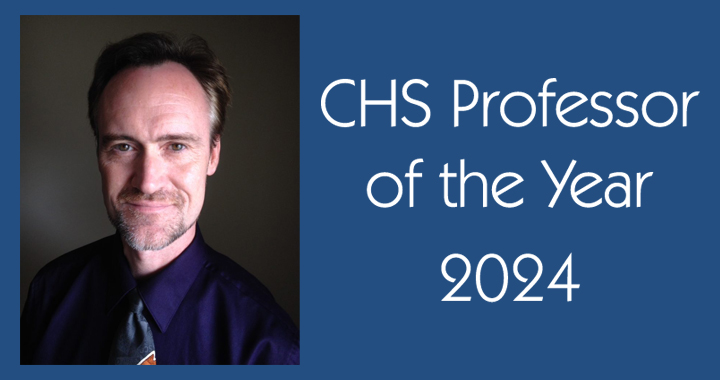
Columbia, S.C.—During a virtual graduation ceremony on Sunday, December 17, the Votaries Alumni Circle of Cherry Hill Seminary announced the winner of this year’s Wendy Griffin Professor of the Year Award. The recipient is Keith Cates, PhD, EdS, Dept. of Pastoral Counseling & Chaplaincy.
Cates (pictured at left) received his Ph.D. In Counselor Education and Supervision from Auburn University. Additionally he holds an Ed.S in Guidance and Counseling, an M.A. in Psychology, a B.A in Psychology and a B.F.A. in Fine Arts from the University of West Georgia. He is a Licensed Professional Counselor and has held state licensure in Georgia, Alabama and Alaska. He currently works in higher education and continuing adult education as faculty, clinical director, and consultant in the areas of assessment, accreditation and program curriculum development. His research has centered on non-mainstream and sub-cultural populations and his clinical practice has focused on working with Military, EMS, Fire and Police personnel and providing clinical supervision for counselors seeking licensure. He is a member of the Ordo Templi Orientis where he has served in the role of Bodymaster as well as worked with the OTO’s Psychology Guild to serve the pastoral counseling training needs of the OTO’s clergy.
From his student nomination we read, “Dr. Cates provided as each the opportunity to dig deeper into our own understanding, discuss it with each other and grow substantially from the interaction. We learned as much from each other as we did from him, but it was his facilitation process and class design that allowed that to be possible. . .The design of this class, and the facilitation method of this professor is one of the best that I have experienced so far.”
“To be nominated by the students for this award means everything to me,” said Cates. “A class can go from good to great with the involvement of the kind of students you find at Cherry Hill. These are the students that propel a class by asking deep and difficult questions, and promote a desire for learning that you hope to find in graduate classes. I have been fortunate to be a part of such classes. Thank you for this honor.” Nominations are submitted by students who have taken a course in the past year with their nominee; nominees are reviewed and voted on by the Votaries.
Also honored with the new Hypatia Award for Excellence in Education was Candace Kant, PhD, (pictured left) for her outstanding service to students in the past year. Kant holds a Ph.D. in history from Northern Arizona University. She taught history, women’s studies, and religious studies courses at the College of Southern Nevada since 1976, including such classes as the History of Witchcraft, Goddess Traditions, Introduction to Modern Paganism, and Modern Pagan Thought, all of which she developed. After 32 years of teaching she retired and was awarded the title Emerita. She joined the faculty of Cherry Hill Seminary in 2009. Over the years she served as chair for the Department of Theology & Religious Studies, was Dean of Students from 2012 to 2018, and was Academic Dean from 2018 to 2021. A devotee of Sekhmet, Kant formerly served as a priestess at the Temple of Goddess Spirituality, participating in creating and leading rituals there. An active member of member of the Interfaith Council of Southern Nevada, Kant is often asked to speak to local groups on the topic of witchcraft and paganism.
“Working with Cherry Hill Seminary is the ultimate reward for long years in higher education,” said Kant. The students, faculty and staff are absolutely the best. My work with the Seminary has brought so many rewards and wonderful experiences.”
Both awards were part of a graduation ceremony recognizing the award of the Community Ministry Certificate to the following students: Gwen Armshaw, Christopher Deane, Ron Padron, Kerry Robinson, Heather Westenhofer, and Jenny Zappala.
Addressing the group of students, Holli Emore, MDiv, said, “To our new CMCs, we affirm the value of the work that each of you has chosen to undertake, the preparation that you have put into your training, and the honest self-examination which have brought you to this achievement. Our spiritual path is often very different to those in other religions. Each of you will make your own unique journey from this point. We give you our blessing and send you from here with our unwavering support of you in your life’s work, in whatever form you create.”
Each of the students spent at least fifteen months of self-study accompanied by a faculty-mentor. The program covers ethics; Pagan history and theology basics; creating and leading ritual; diversity & cultural understanding; personal spiritual development; serving people at various life stages; group leadership; family dynamics; addictions; domestic violence issues; teaching and presenting; developing your allies & more. (More info here)
Click to view a recording of the ceremony, including keynote remarks by Academic Dean, Margot Wolfe, PhD.
Votaries Alumni Circle is a membership group which supports and promotes the Seminary, provides social events for members, and sponsors programs like the Coming to the Center public livestreamed program each semester. Its selection of the Professor of the Year is a several-months long process and a highlight of the year.
Cherry Hill Seminary is the leading provider of education and practical training in leadership, ministry, and personal growth in Pagan and Nature-Based spiritualities, empowering spiritual leadership, scholarship, and ethics through theological and pastoral education to nurture interfaith engagement in a diverse society. https://cherryhillseminary.org/
Graduates, students and friends now have more ways to stay connected and continue supporting quality Pagan and Nature Spirituality education by becoming a member of Cherry Hill Seminary Votaries Alumni Circle. Annual membership offers opportunities for celebration, networking, continuing education, outreach, recognition and service.
Why the Name Votaries?
In ancient and modern times, a person dedicated to religious service may be referred to as a “votary.” A votary can also be a passionate advocate of something, like Pagan and Nature Spirituality education. For these reasons, the Alumni Circle has chosen Votaries as a name that reflects our mission and purpose.
Who Can Join?
All graduates of CHS, and membership is also open to currently enrolled students and friends who wish to deepen their engagement with and commitment to Cherry Hill Seminary. Email alumni@cherryhillseminary.org with questions.
If you have done the signup before, log in to your Populi account and click “Registration is now open” on the Dashboard. Payment is due no later than two weeks before start date.
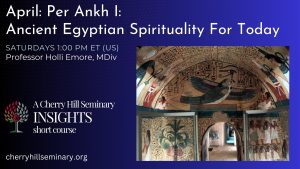
April: Per Ankh I: Ancient Egyptian Spirituality For Today During four exciting weeks discover the landscape that inspired the world’s oldest recorded religion – the mighty Nile, the deserts, the delta and Kemet’s neighbors. Learn about several major creation myths, introduce yourselves to ancient netjeru (deities) and their temples. Consider what ancient Egypt means for us today. Instructor: Holli S. Emore, M.Div. Day/Time of class meetings: Saturday, 1:00 pm ET Texts: Egyptian Mythology: A Guide to the Gods, Goddesses, and Traditions of Ancient Egypt by Geraldine Pinch. Oxford University Press, 2002.
January: Slowing Down in the Late Capitalocene – registration now closed We live in a time where many of us feel stressed and overwhelmed as we struggle to care for ourselves and our communities. Religious leaders particularly feel the pressure of balancing care for their communities and care for themselves. In this class, we will explore our feelings of powerlessness, our need for rest, how to find hope for our future, and ways to stay grounded in a time of unnerving and intense change. Burnout is the hallmark of our time and healing from it will require systemic change and trusting our own leadership. The class will blend readings, reflection, and suggestions for spiritual practice. Instructor: Cedar Monroe, M.Div. Time: January Saturdays 1:00 pm ET Texts: Materials provided by instructor
For some folks, their Pagan practice waxes and wanes with the phases of the Moon. For some, every day is a holiday! In this course, we will explore what it means for us to be Pagan every day – how it affects our work, our relationships, and of course our practice. Using a mix of historical sources and modern editorials, we will evaluate how Pagans have practiced their religion and address the obstacles they have faced to building and deepening their practice. This course encourages all to evaluate how they transmute their beliefs into daily practice for lifelong spiritual development. In the end, the goal is for students to better understand their values, their practice, and how best to DIY a spiritual practice in the absence of temples, priesthood, and sacred texts. Instructor: Ryan Ridpath Time: February Wednesdays, 7:00 pm ET
March: The Art of Soul-Making CANCEL Daily life requires us to be focused on external issues and on fulfilling obligations and demands toward other people, be they family, colleagues or friends, so much so that it can be hard to tune in to our deeper needs. In this experiential course, we will cultivate a transformative process to withdraw our senses and attention from the many demands placed on us by society and focus on connecting to Soul. We will nurture this connection through imagination, and invite inspiration and intuition through a mindful and creative step-by-step process. The only materials needed are pens, pencils, paper and your favourite oracle or inspiration card deck. Instructor: Francesca Aniballi, PhD Classes: Saturdays, March 1, 8, 15, 22 at 12:00 pm ET Texts required: none
Graduate Courses – registration now closed for Spring
T6475 Indigenous Religion & Culture A survey of indigenous, place-based and land-based traditions that are not part of the contemporary Pagan movement. Native American religions, Afro-Caribbean traditions, shamanisms around the world, Hinduism, Australian aboriginal traditions, and more. Instructor: Stacy Brooks, Ph.D. Day/Time of class meetings: Monday, 6 pm ET Texts: Cajete, Gregory. Native Science: Natural Laws of Interdependence. Santa Fe: Clear Light Publishers, 2000. Hillman, James. Archetypal Psychology: A Brief Account. Washington DC: Spring Publications, 1983. Levine, Lawrence. Black Culture and Black Consciousness: Afro-American Folk Thought from Slavery to Freedom. New York: Oxford UP, 1977.
P6700 Sexuality, Culture & Religion Beyond the boundaries of our dominant culture, there are beliefs, customs and practices that, to us, may appear taboo, offensive or even illegal. Within the culture that spawned those beliefs, customs and practices, they constitute the social norm. This course examines human sexuality in the context of culture and religion in an academic and unbiased format. Students aspiring to minister in specialized and multicultural settings must be aware of and sensitive to the diversity of human sexuality and experience. Same course as M6700. Instructor: Megan Rose, Ph.D. Day/Time of class meetings: Tuesday, 8 pm ET Text: Middleton, DeWight R. Exotics and Erotics: Human Cultural and Sexual Diversity. Waveland, 2001.
C5121 Contemporary Global Paganisms A survey course introduces students to the wide variety of Paganisms being practiced around the world, challenging scholarly and personal definitions of Paganism by tracing common threads among disparate traditions. Students will then explore the Internet and their local communities to gain first-hand experience with traditions not their own. We address issues of cultural appropriation versus appropriate cultural borrowing and consider Paganism’s position as a consciously (re)constructed, combinative religious path. A final project allows students to synthesize their knowledge in a comparison of Paganisms that supports the unique thrust of each student’s ministerial path. Instructor: Michael Strmiska, Ph.D. Day/Time of class meetings: Saturday, 10:30 am-12 pm ET Texts: John Salibi, Understanding New Religious Movements, 2nd Edition Revised Edition (2003) Michael F. Strmiska, Modern Paganism in World Cultures: Comparative Perspectives (2005).s is your first post. Edit or delete it, then start writing!